
INTRODUCTION
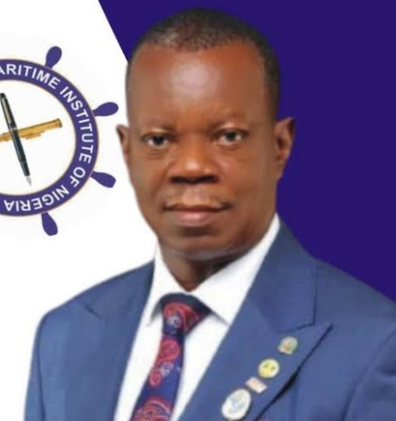
It is both a rare honour and a profound responsibility for me to stand before you today at this critical assemblage of the finest minds in Nigeria’s Maritime Sector. On behalf of the Governing Board and Management of the International Maritime Institute of Nigeria (IMION for short), I heartily congratulate and commend the President and Members of the Maritime Correspondents’ Organisation of Nigeria for the very novel initiative of convening this Conference under a theme that strikes at the very heartbeat of our national survival and economic future: “Sustainable Fishing in Nigeria – Pathways to Growth, Food Security and Coastal Livelihoods.” There is a time-tested proverb common along our expansive coastlines, stretching from the historic fishing communities of Badagry to the labyrinthine estuaries of the Niger Delta, which goes like this: “The ocean never dries, but the net can still come up empty.”
As we ponder on this proverb in the course of the 2026 MARCON National Conference on Sustainable Fishing—focusing on a critical pillar of our national Blue Economy agenda; it suffices for me to emphasise that the Theme of the Conference is not only instructive in context, but profoundly timely as the focus on sustainable fishing stands at the intersection of key national imperatives. These imperatives encompass food security, socioeconomic prosperity and environmental sustainability, all of which are integral catalysts of national development. It directly addresses how we will feed a population of over 220 million people, how we safeguard millions of jobs along our coastline, how we unlock the vast, untapped potential of Nigeria’s fisheries resources and how we optimise our maritime domain. Pertinently, Nigeria is endowed with an expansive maritime domain that is very rich in both living and non-living resources. The Domain features a long coastline spanning approximately 420 nautical miles (nm) translating to about 853 km along the Atlantic Ocean and projecting 200 nm seaward to encompass the Exclusive Economic Zone (EEZ). Our maritime domain also includes vast networkings of inland waterways, creeks, estuaries, and the Niger Delta Basin; all teeming with fisheries resources and aquacultural potentials. Yet, for decades, our offshore and inland fisheries have operated like a sleeping giant—burdened by ecological pressures, under-investment, and the looming shadow of unsustainable exploitation. Today, we must transition from being passive spectators of our maritime wealth to active, deliberate stewards.
THE PARADOX OF SUSTAINABLE FISHING IN NIGERIA
Distinguished ladies and gentlemen, without mincing words, the stark realities before us in Nigeria regarding fishing are quite revealing. Today, Nigeria stands at the profound crossroads between abundance of fisheries resources cum enormous aquacultural potential within our rich maritime domain on one hand, and gross insufficiency of seafoods to feed the growing youthful population on the other. Ironically, Nigeria remains one of the largest importer of seafood in Africa, expending hundreds of millions of scarce dollars annually to bridge a huge domestic supply deficit. According to data from the United Nations Commodity Trade Statistics Database (UN COMTRADE), imports of frozen fish and seafoods into Nigeria stood at $606 million in 2023, rising to $688.5 million in 2024 and further to $866 million in 2025 representing a compound annual growth rate of 19.54%. Yet, our waters are naturally blessed, teeming with rich marine biodiversity and fisheries resources. Let me contextualise it this way: Our inability to translate the abundant fisheries resource endowment into seafood sufficiency, and by extension, food security is the paradox which this Conference seeks to unravel and proffer workable solutions to. The valid question in this context is, why do we as a nation suffer this unsustainable paradox?
The answer lies squarely in how we manage—or fail to manage—our aquatic resources. Today, our marine ecosystems face what can be described as an existential triad of threats comprising: aggressive overfishing, accelerating climate change, and the devastating plague of Illegal, Unreported, and Unregulated (IUU) fishing. These tripple threats require a deliberate integrated strategy to tame holistically. Foreign industrial trawlers, operating like predatory ghosts within Nigeria’s EEZ, are systematically plundering our marine wealth and illegally depredating our sovereign aquatic resources. They do not merely steal fish; they actively sabotage our macroeconomic growth. Through destructive uncontrolled bottom trawling, they systematically flatten vital benthic habitats and flagrantly rob our local artisanal fishermen of their daily sustenance. When a local fisherman in Ondo or Delta State ventures out to sea and returns with an empty canoe, that is not a simple bad day at work—that is a direct, violent hit to Nigeria’s national food security. It forces yet another vulnerable household beneath the poverty line.
STRATEGIC PATHWAYS TO SUSTAINABLE FISHING IN NIGERIA
Let me be clear regarding sustainability: we cannot expect to harvest tomorrow, what we ruthlessly destroy or allow others to destroy or neglect to nurture today. To transition from vulnerability to long-term sustainability and food security, Nigeria must boldly chart a new course defined by disciplined execution and measurable performance indicators. In an effort to contribute to the ongoing discourse on ways towards emplacing sustainable fishing for socioeconomic prosperity, IMION advocates for a five-pillared strategic framework.
Robust Regulatory Synergy and Enforcement. We must harmonize the efforts and competencies of our maritime security agencies, port economic regulators and fisheries departments. The remarkable successes the Nigerian Navy have achieved in collaboration with other maritime stakeholders in suppressing piracy and combatting IUU Fishing through cooperative efforts must now be expanded in our fisheries domain.
Bridging Science, Policy and Practice. Sustainable management cannot be driven by guesswork. We must empower our research institutions, such as the Nigerian Institute for Oceanography and Marine Research, and of course, IMION to provide empirical data on stock assessments. Policy must follow the scientific backbone with credible data, ensuring that catch limits, closed seasons, and marine protected areas are respected and enforced.
Capacity Building and Technological Integration. We must transition our local artisanal and small-scale fishermen into modern, tech-enabled aquaculture and commercial operators. This involves investing in cold-chain infrastructure, processing technology, and institutional training via specialized bodies like our maritime academies will reduce post-harvest losses and create wealth for our youth. We must transition aggressively from wild-capture fisheries to technologically driven aquaculture. Sustainable aquaculture—particularly the deployment of modern cage culture systems within our coastal lagoons—holds the key to rapidly erasing our national food deficit. It creates predictable, scalable, and secure investment opportunities for our youth and women, transforming fishing from a mere speculative survival trade into a sophisticated, deliberate wealth-generating enterprise.
Leveraging Advanced Maritime Technology and Data Intelligence. At IMION, we advocate fiercely for data-driven marine spatial planning fueled by robust Blue Economy knowledge systems. We cannot effectively manage what we do not accurately measure. Nigeria requires advanced Vessel Monitoring Systems (VMS), satellite surveillance, and stricter enforcement of catch quotas to ensure industrial fishing leaves sufficient room for nature—and our coastal communities—to regenerate.
Community-Based Fisheries Management. We must institutionalize Community-Based Fisheries Management (CBFM). I wish to emphasise here that the true heart of the Blue Economy in Nigeria beats within our people. The authentic custodians of our waters are the millions of coastal dwellers who have lived in tandem with the sea for generations. We cannot achieve sustainable fishing through rigid, top-down enforcement alone without community driven initiatives. We must therefore empower local cooperative societies, grant them legitimate co-management rights over local fishing grounds, and involve them directly in the monitoring and protection of our waters. When communities possess a legal, vested ownership stake in the health of their marine environment, they naturally become our frontline defense against destructive practices.
THE IMION IMPERATIVE
IMION is actively exploring capacity-building frameworks designed to train coastal youths not merely to catch fish, but to excel as marine entrepreneurs, eco-tourism guides, boat builders and specialised technicians. This intentionally eases the predatory pressure on our wild fish stocks while multiplying household incomes. The ocean does not negotiate with our delays. If we fail to act decisively today, we mortgage the sustenance of tomorrow’s generation. At IMION, we remain committed to providing the intellectual, capacity-building, research-based and governance foundation required to navigate this identified paradox of sustainable fishing in Nigeria. Let us leave this Conference not merely with resolutions, but with an actionable blueprint. Together, let us transform our fisheries sector into a thriving, sustainable engine for economic growth, nutritional security, and resilient coastal livelihoods.
CALL TO ACTION
As I end my session, let me make this clear: policy execution relies significantly on the cross-functional and cross-sectoral synergy like the one generated right here at this year’s MARCON Conference. It demands that the academia provide cutting-edge, actionable research; that the financial sector provide tailored credit structures for artisanal cooperatives; that regulators enforce the law without compromise; and that institutions like IMION build the critical intellectual and human capacity required to steer this ship to harbour. Therefore, all hands must be on deck towards emplacing sustainable fishing in Nigeria. 8. Let us depart from this Conference, not with beautifully bound, soon to be forgotten communiques, but with an unswerving, fierce commitment to action. Let us protect our waters and fisheries resources therein, so that they may protect our future. Together, let us build a Nigeria with sustainable fishing ecosystem where our oceans thrive, our tables are filled and our coastal communities prosper.